01
The ascent
Every harvest begins on foot, before light. The colonies we follow sit between 1,800 and 2,600 metres; some take a full day to reach, the last hours on rope.
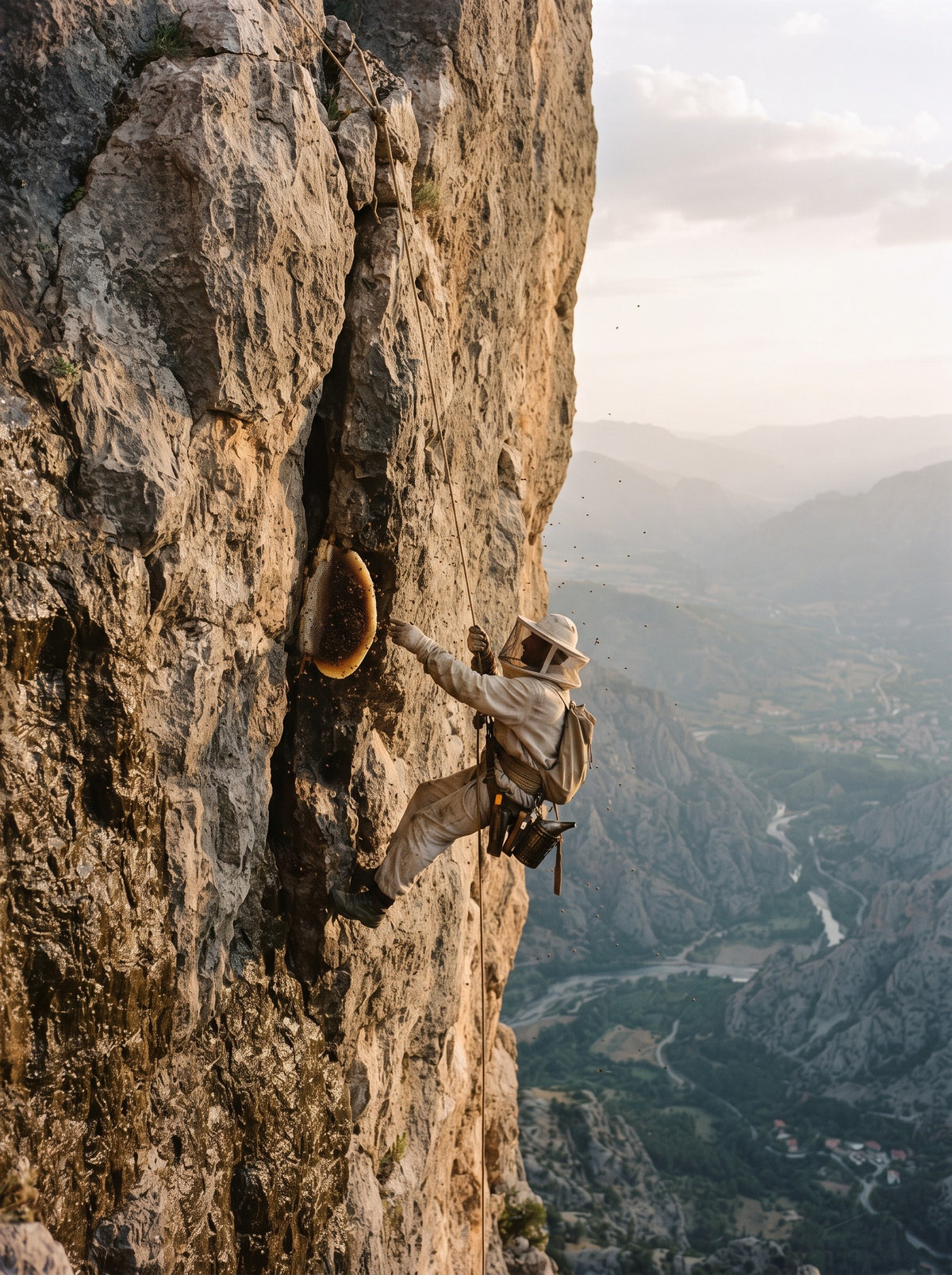


Anatolia, Türkiye · Harvest 2026 · Laboratory-certified
Wild honey gathered by hand from caves, hollow oaks and cliff faces high above the tree line. Four kilograms a year. Tested by two accredited laboratories: enzyme activity five times the legal minimum, no added sugar, never heated.
A note on method
Measured, not claimed
Anyone can print 'raw' on a label. We sent the 2026 harvest to two laboratories accredited to ISO/IEC 17025 by TÜRKAK and published every line of what came back. These are the six that matter most.
The bee's own enzyme, destroyed by heat. Five and a half times the legal floor: the laboratory's proof of raw, unheated honey.
The freshness clock. It rises with every hour of heat and every month on a shelf. Ours has barely started.
The amino acid the bee adds as honey matures. Nearly double the threshold: a colony allowed to finish.
Isotope-ratio screening for cane and corn syrup. Nothing added, nothing diluted.
No table sugar, no starch syrup, no fed colonies. The bees converted every trace before the comb was capped.
Dense, fully capped honey. Stable for years without a single additive, and it never ferments.
Reports G26 186183309/0 (NANOLAB İstanbul, TÜRKAK AB-0566-T) and G26-8474/00 (RADIX İzmir, TÜRKAK AB-1197-T), September 2026. Limits: Turkish Food Codex Honey Communiqué No. 2020/7.
Three origins
The same bees, the same country, three kinds of wild place. From the caves, forests and high meadows of Anatolia, Türkiye, every comb we are given is crushed by hand, strained through cloth and bottled as one honey of the season. What each place adds is what you taste.

Limestone caves hold a cool, constant dark. Combs grown here are dense and slow, and they give the honey its near-black depth and the mineral note that lingers.
The harvest
In ancient oaks split by time, colonies build tall vertical sheets of comb. From here comes the amber warmth, the resin, and the faint bitterness of bark at the edge.
The harvest
Above the tree line the season lasts six weeks. Thyme, sainfoin and a hundred alpine flowers lend the brightness, the lift, the taste of altitude.
The harvestThe harvest
There is no shortcut up, and there is no more than the mountain gives: about four kilograms a year. Everything we do is slower than it needs to be, because the colony sets the pace, not the calendar.


Every harvest begins on foot, before light. The colonies we follow sit between 1,800 and 2,600 metres; some take a full day to reach, the last hours on rope.
We watch before we touch. A colony under stress is left alone. We take comb only from colonies with reserves to spare, and never the brood.
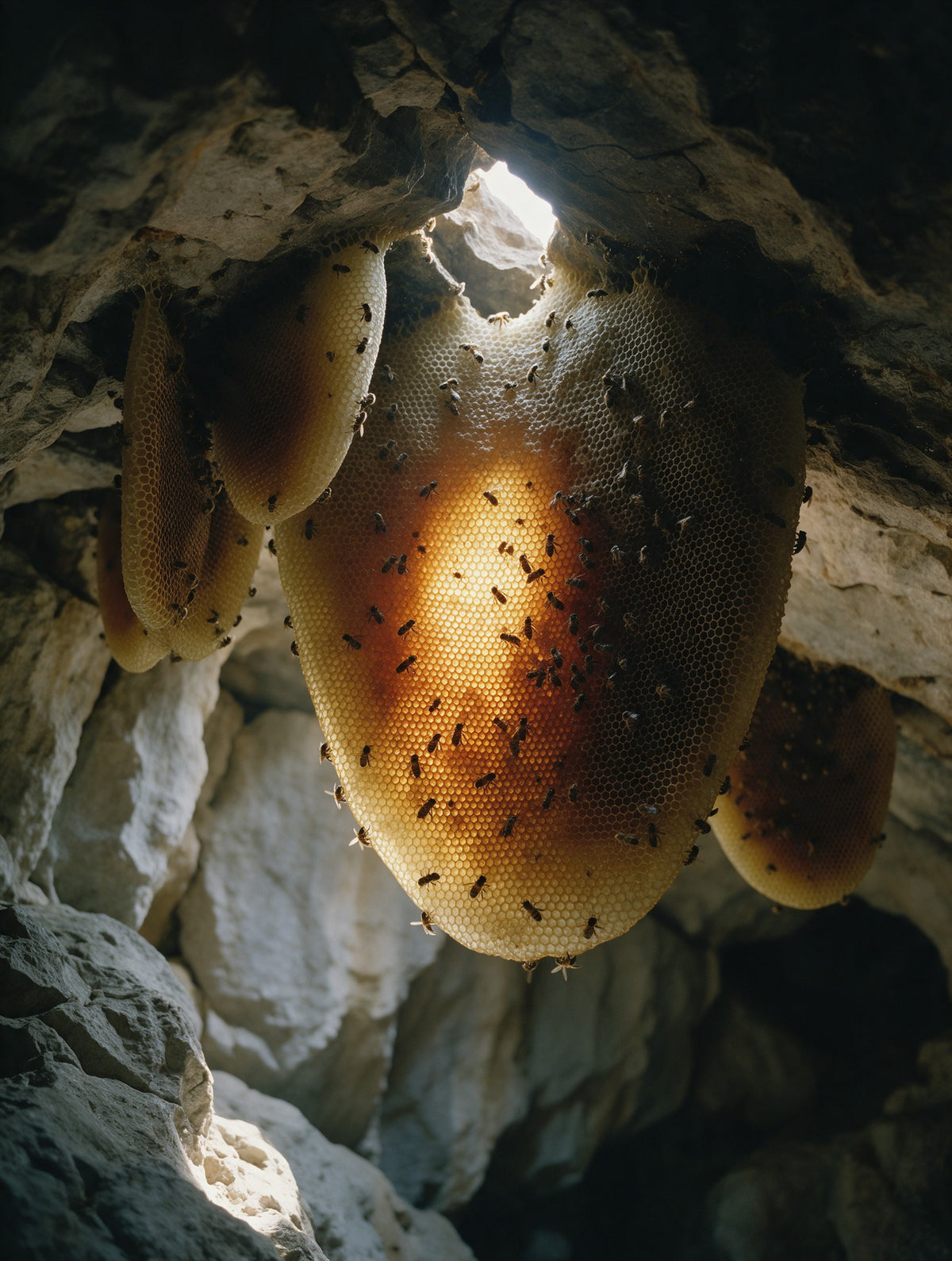
By hand, with a blade and smoke from dried thyme. No machines, no extraction, no heat. The comb is lifted whole and wrapped in cloth.
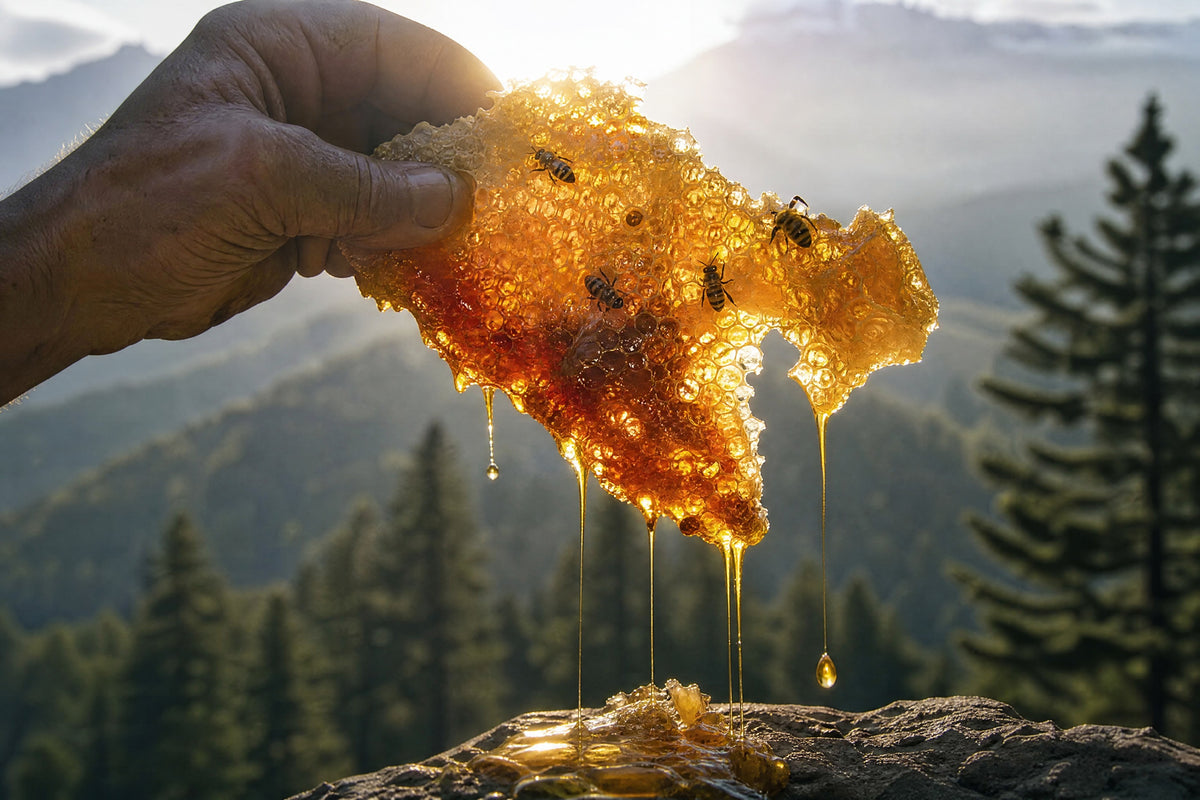
The boxes come down on our backs. The honey is never pumped, fine-filtered or warmed. It settles in stone-cool rooms until it is ready.
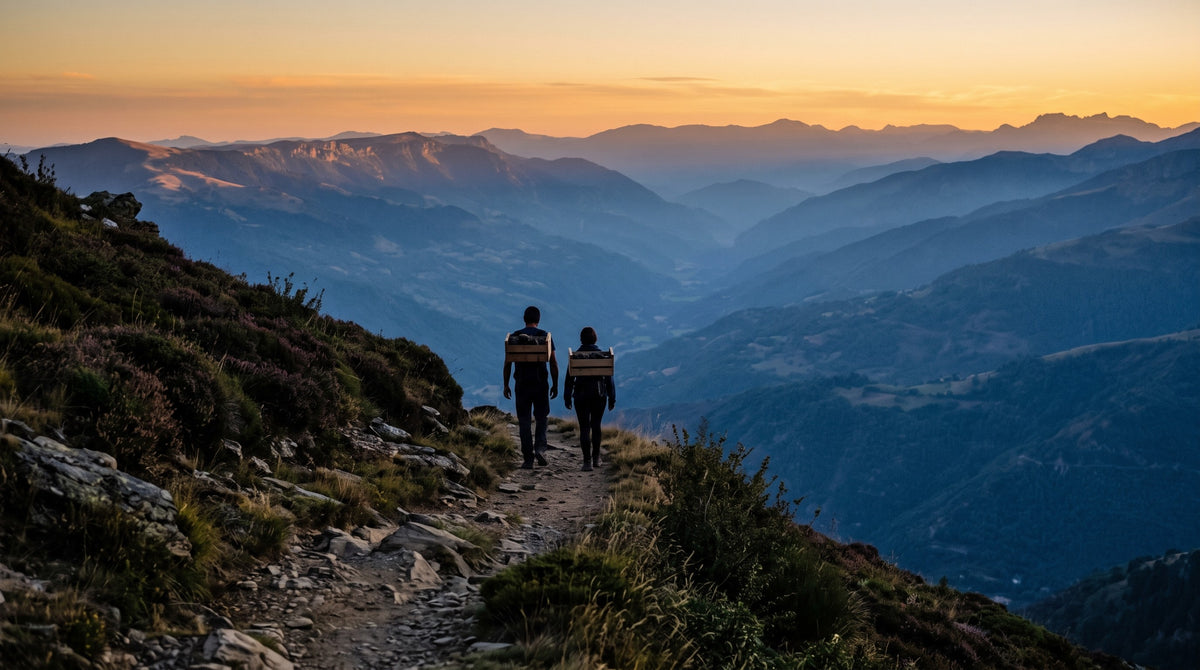
Each batch is sealed with its own number and sent to an independent laboratory before it is offered. If it does not pass, it is not sold.
This season
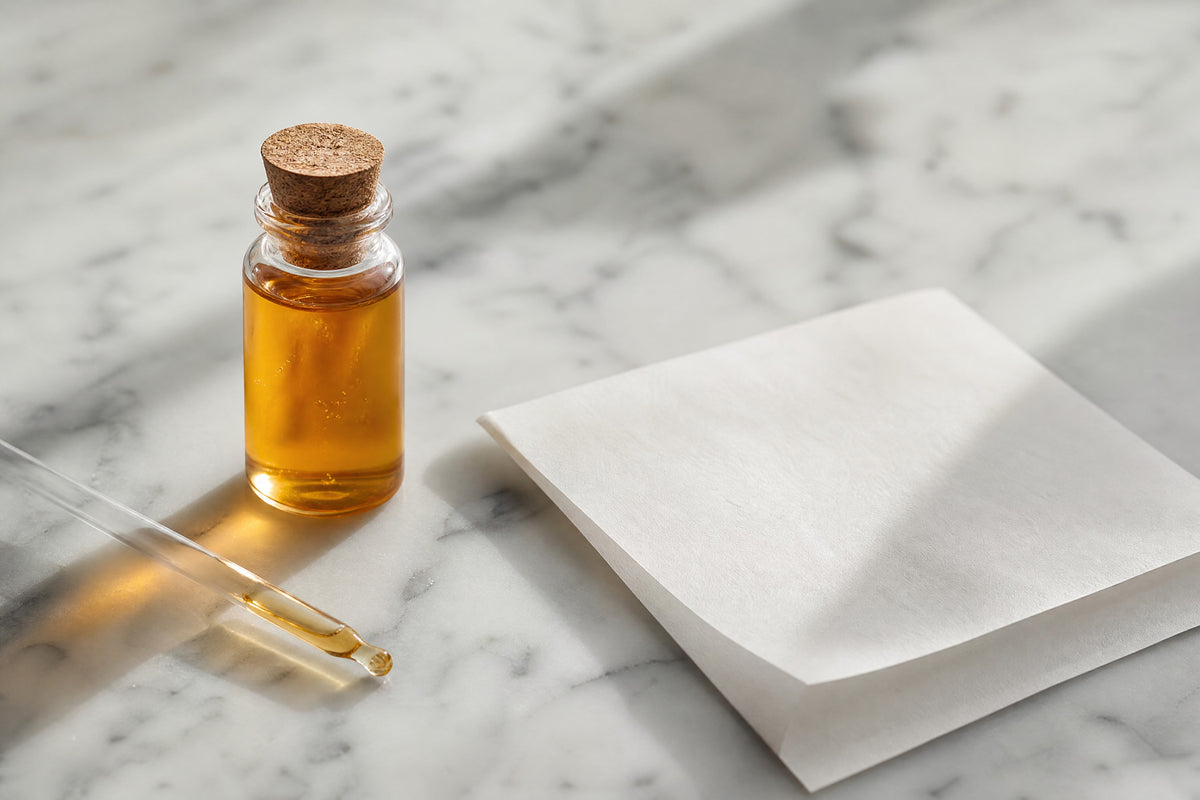
That is the entire yield of the wild colonies we follow, fully strained by hand and bottled in three sizes: 200 g, 470 g and the one-kilogram Special Collection. Every jar carries the same laboratory reports. When the harvest is gone, it is gone until the mountain decides otherwise.

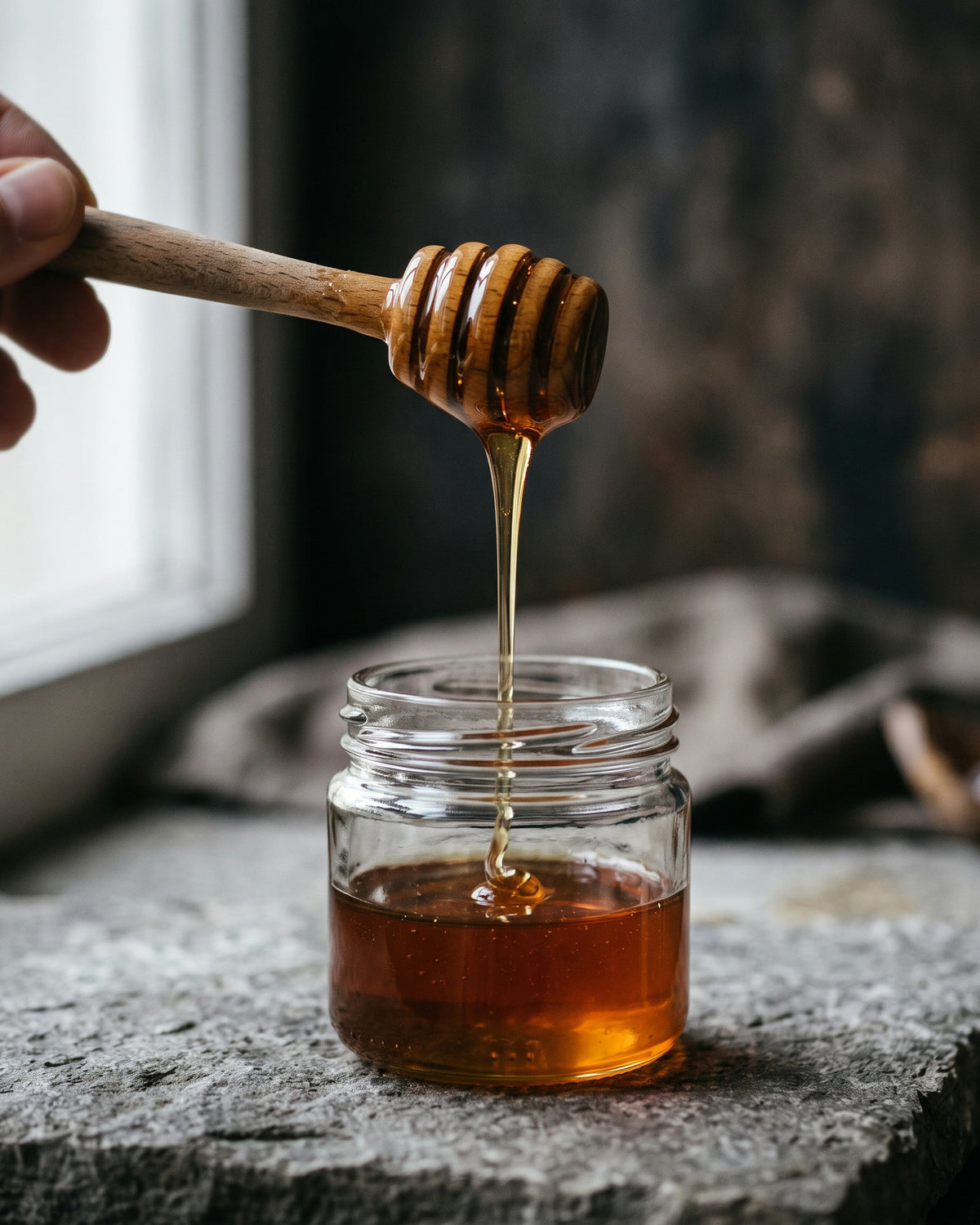
Wild colonies · caves, hollow oaks, cliff faces· 1,800–2,600 m
Deep, mineral and warmly resinous, with dried apricot, wild thyme and a long clean finish. Fully strained: nothing in the jar but honey.
View the jar
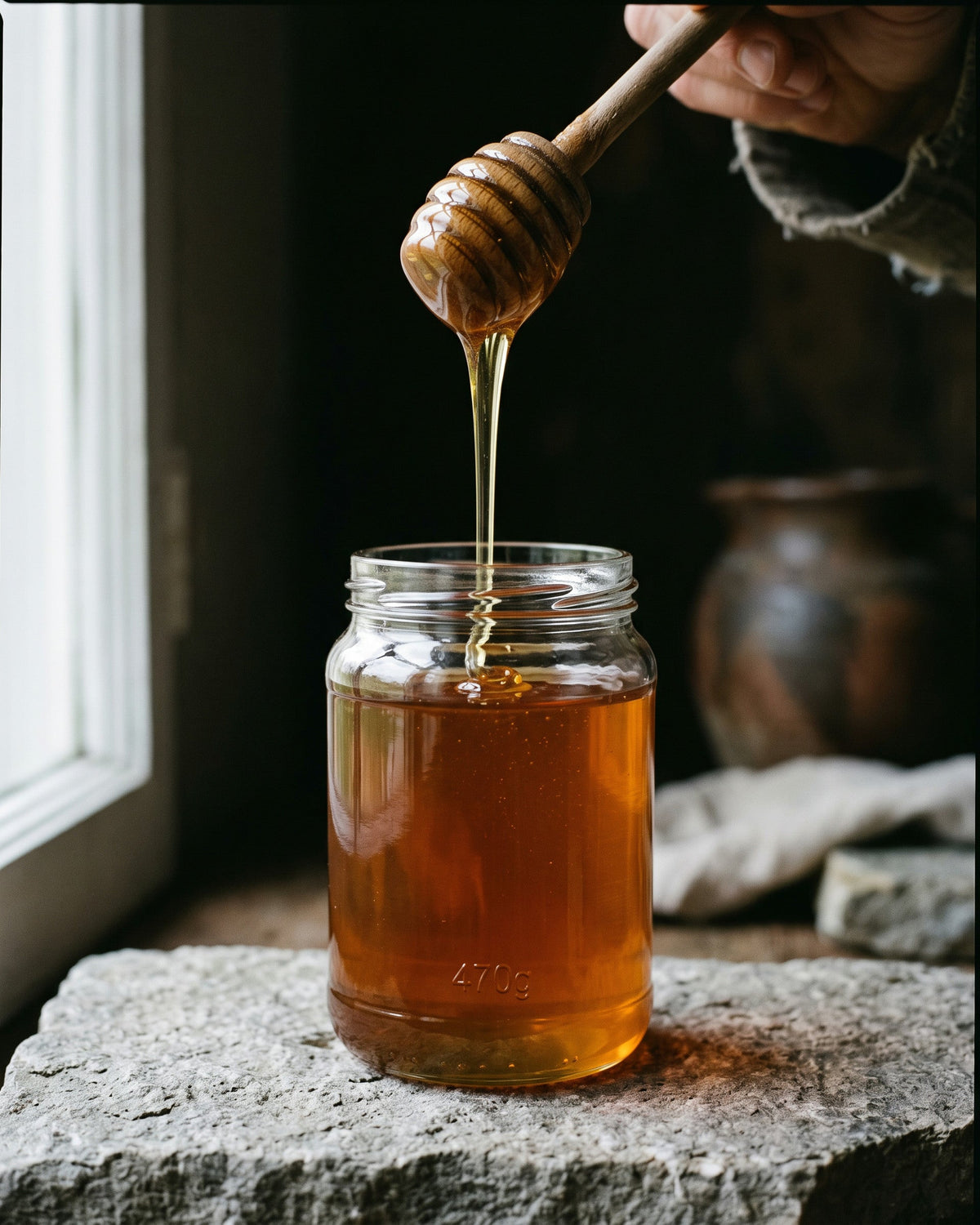
Wild colonies · caves, hollow oaks, cliff faces· 1,800–2,600 m
Deep, mineral and warmly resinous, with dried apricot, wild thyme and a long clean finish. Fully strained: nothing in the jar but honey.
View the jar
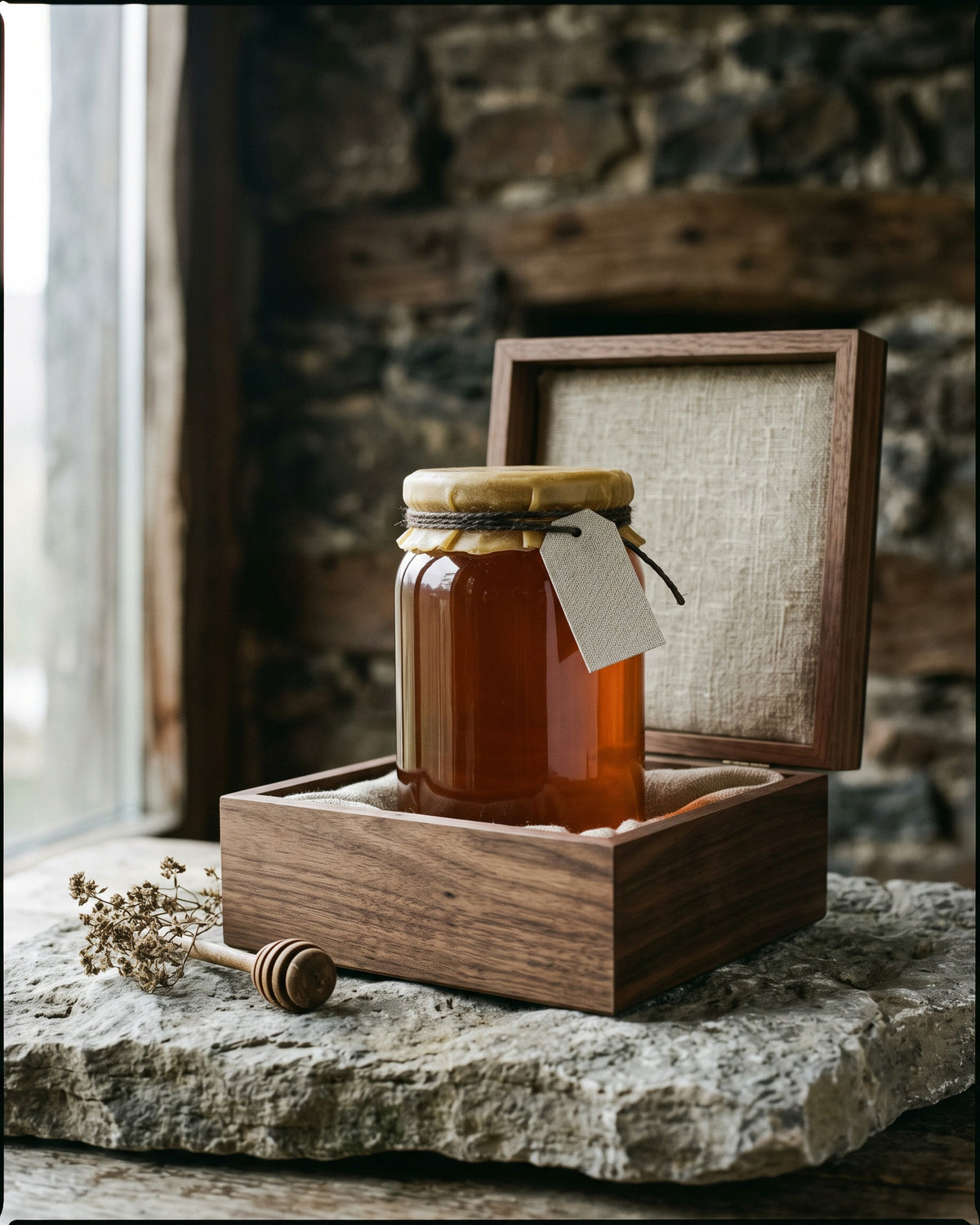
Wild colonies · caves, hollow oaks, cliff faces· 1,800–2,600 m
Drawn from the first run of the harvest: the deepest, most aromatic honey of the year, glass-clear, with a finish that lasts minutes rather than seconds.
View the jarWhat this honey does
Honey is only as good as what survives the journey from the comb. Heat, fine filtering and blending strip out the enzymes, aromas and compounds that made it worth harvesting. Ours arrives with all of them intact, and the certificate shows it. Here is what that means on the spoon.
Diastase and the other enzymes bees add during ripening are the first casualties of pasteurisation. In this honey they are present at more than five times the legal minimum: the same amylase activity that begins the breakdown of starches, exactly as the bees left it.
In the certificateDiastase 44.27 DN · limit ≥ 8
Only the sugars the bees made, fructose and glucose in a near-perfect 1.12 balance, and not a trace of sucrose or maltose. Fructose is taken up gradually, which is why a spoon of raw honey sustains rather than spikes.
In the certificateFructose / glucose 1.12 · sucrose and maltose not detected
Dark, high-altitude wild honeys are characteristically rich in polyphenols and flavonoids, the compounds behind their colour and the bitterness at the edges. Never heated, so they arrive as they were gathered: the natural antioxidants the body uses against oxidative stress.
In the certificateHMF 6.2 mg/kg · never heated
Raw honey has been put on skin and wounds for as long as it has been eaten. Modern research on medical-grade honey credits its support of tissue repair and cell renewal to three things this honey has in full: intact enzymes, natural antibacterial activity, and a low water content that draws fluid and starves bacteria.
In the certificateMoisture 14.0 % · diastase 44.27 · proline 534.56
As raw honey meets moisture, its glucose-oxidase enzyme slowly releases hydrogen peroxide; low water and natural acidity do the rest. It is why raw honey keeps for years, and why it has always been the first thing reached for with a sore throat.
In the certificateMoisture 14.0 % · free acidity 22.06 mEq/kg
Proline is the marker of honey the colony finished itself. At nearly twice the threshold, this is honey that was never rushed: fuller in aroma, longer on the palate, gentler on the stomach.
In the certificateProline 534.56 mg/kg · limit ≥ 300
How it has always been taken
A spoon from the jar before breakfast. Stirred into warm milk, never hot, at night. Spread on a cut, pressed on a burn, held on the tongue for a cough. In the mountain villages of Anatolia, honey was the medicine cabinet before there was one. We do not claim more than that. We simply harvest it the way that made those uses possible.
Honey is a food, not a medicine. References to traditional use and to research on medical-grade honey are not intended to diagnose, treat or cure any condition. Not suitable for infants under twelve months.
Unfiltered
These were shot on a phone, by the people who climb, in the minutes between the cut and the descent. We would rather show you this than a set.
 Cave · 2,300 m
 Hollow oak · 1,950 m
 Hollow oak · 1,900 m
 Cave · 2,300 m
Harvest footage, Anatolian highlands · Late summer
Journal

HMF, diastase, C4 sugars, pollen. What the numbers on a honey certificate mean, and which ones matter.

The alpine bloom in the Anatolian highlands is short, loud and gone before August ends. What it does to the honey.

A wild colony is not a hive. The rules we harvest by, and the one rule we will not break.
Next harvest
One letter when a new batch comes down the mountain, with its origin, altitude and laboratory results. Nothing else.
No offers, no noise · Unsubscribe any time