01
The ascent
Every harvest begins on foot, before light. The colonies we follow sit between 1,800 and 2,600 metres; some take a full day to reach, the last hours on rope.
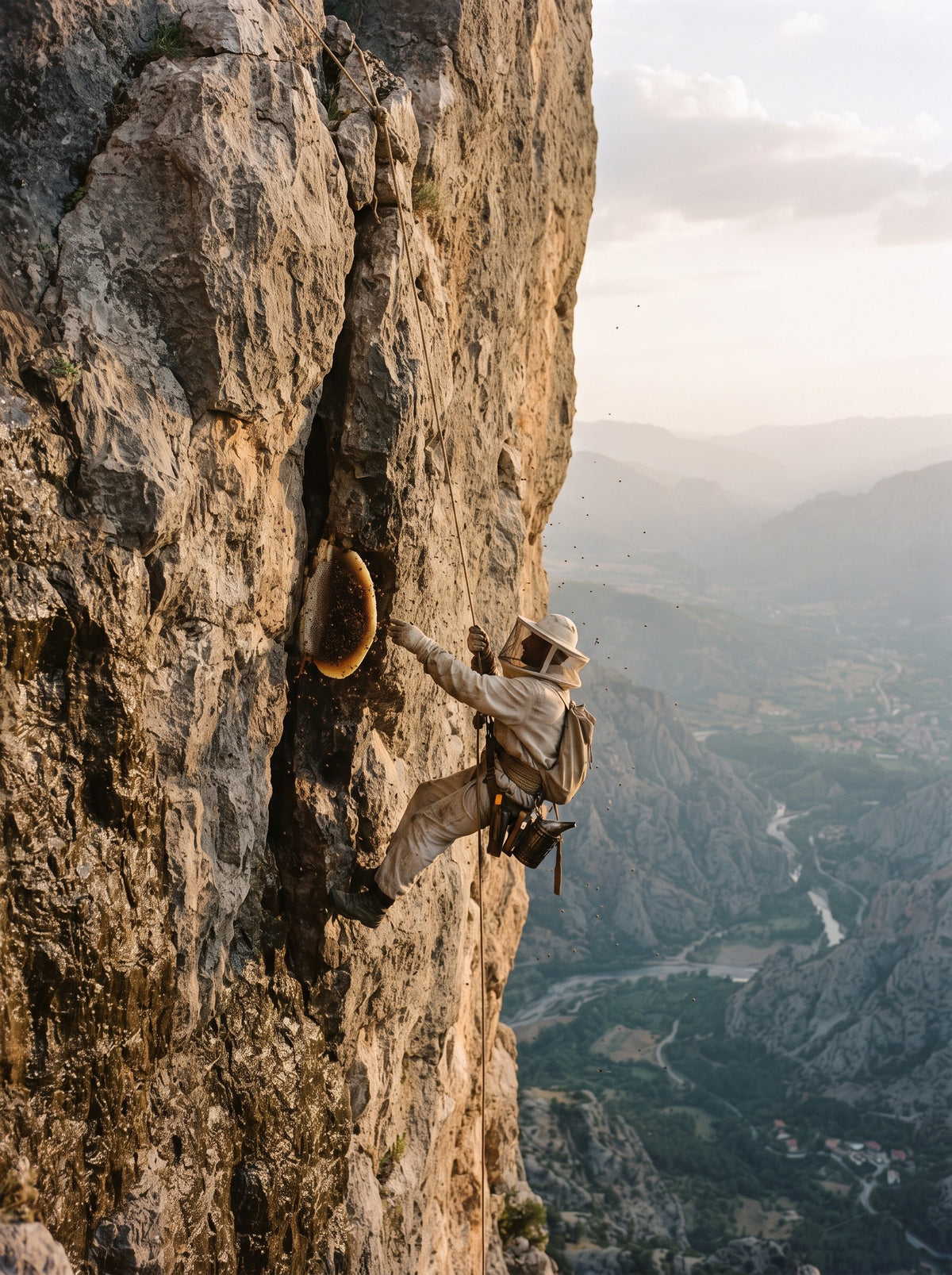

The harvest
How four kilograms of wild honey a year are found, read, cut and carried down. Slowly, on purpose.
Step by step
Everything we do is slower than it needs to be, because the colony and the mountain set the pace, not the calendar.


Every harvest begins on foot, before light. The colonies we follow sit between 1,800 and 2,600 metres; some take a full day to reach, the last hours on rope.
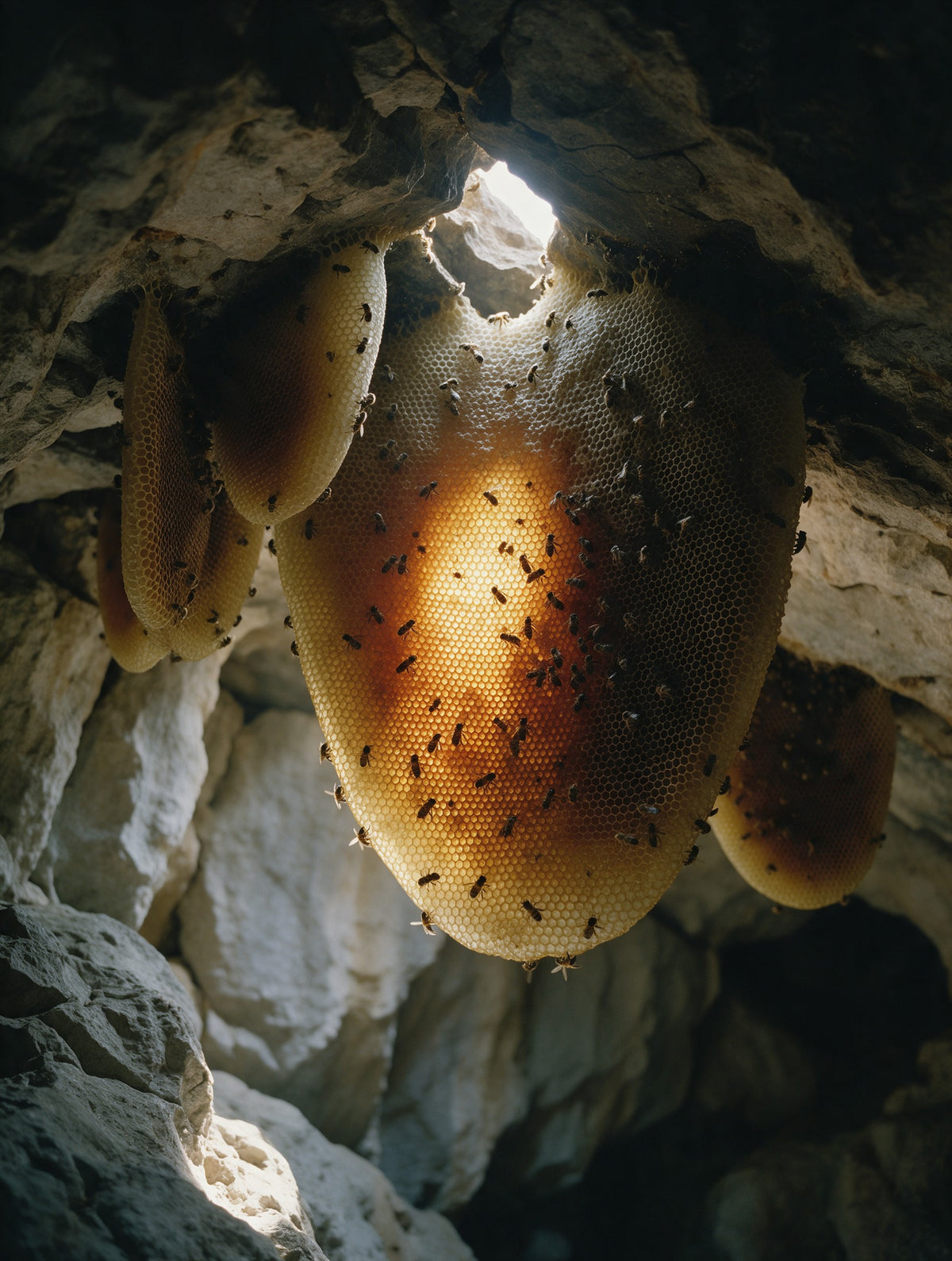
We watch before we touch. A colony under stress is left alone. We take comb only from colonies with reserves to spare, and never the brood.
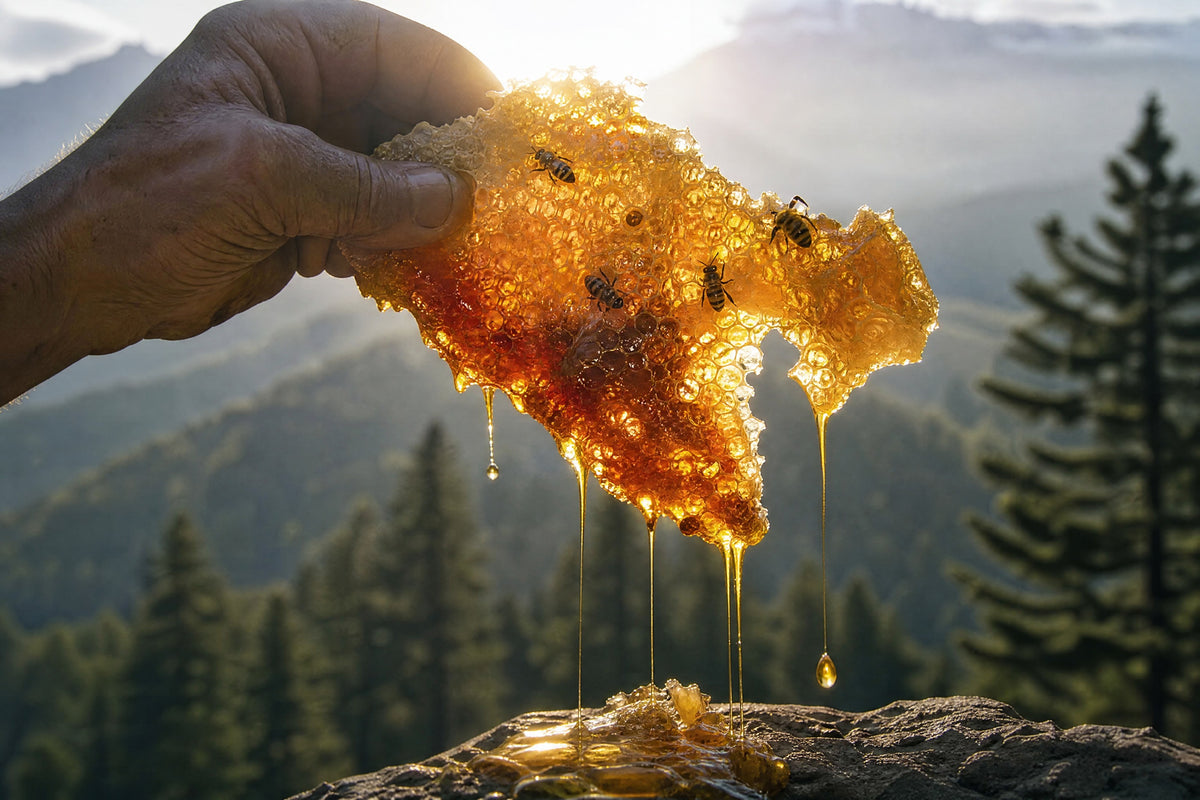
By hand, with a blade and smoke from dried thyme. No machines, no extraction, no heat. The comb is lifted whole and wrapped in cloth.
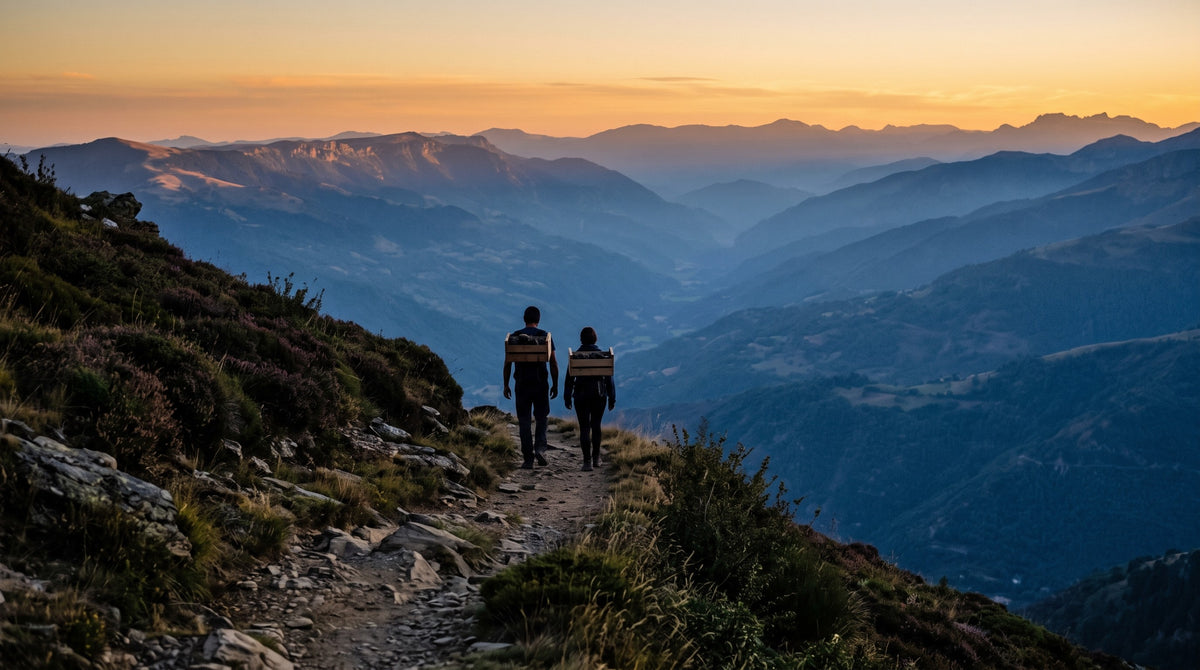
The boxes come down on our backs. The honey is never pumped, fine-filtered or warmed. It settles in stone-cool rooms until it is ready.
Each batch is sealed with its own number and sent to an independent laboratory before it is offered. If it does not pass, it is not sold.
Unfiltered
No studio, no stylist. The people who climb, filming for the people who will eat the honey.
 Cave · 2,300 m
 Hollow oak · 1,950 m
 Hollow oak · 1,900 m
 Cave · 2,300 m
Harvest footage, Anatolian highlands · Late summer
Asked often
No. We take honey comb from the edge of the store, never the brood, and only from colonies with more than they can use. A colony is visited once a season and left with at least two-thirds of its comb. Smoke from dried thyme calms the bees for the minutes we are there.
Because the honey would not be this honey. Wild colonies choose their own sites, forage a mountain no one sprays, and are never fed sugar. The cost is that we cannot make more of it. We have decided we can live with that.
Rarely more than a third of the stores, often much less. In a poor season a colony may give nothing at all, and we climb down empty-handed. The allocation on the site reflects what the mountain gave that year.
Next harvest
One letter when a new batch comes down the mountain, with its origin, altitude and laboratory results. Nothing else.
No offers, no noise · Unsubscribe any time