

Our story
We followed the bees. They led us up.
Lal Anatolia began with a single comb, cut from a cave at 2,300 metres in eastern Türkiye, and the question of why it tasted like nothing we had ever bought. It has since taken us across the whole of Anatolia.
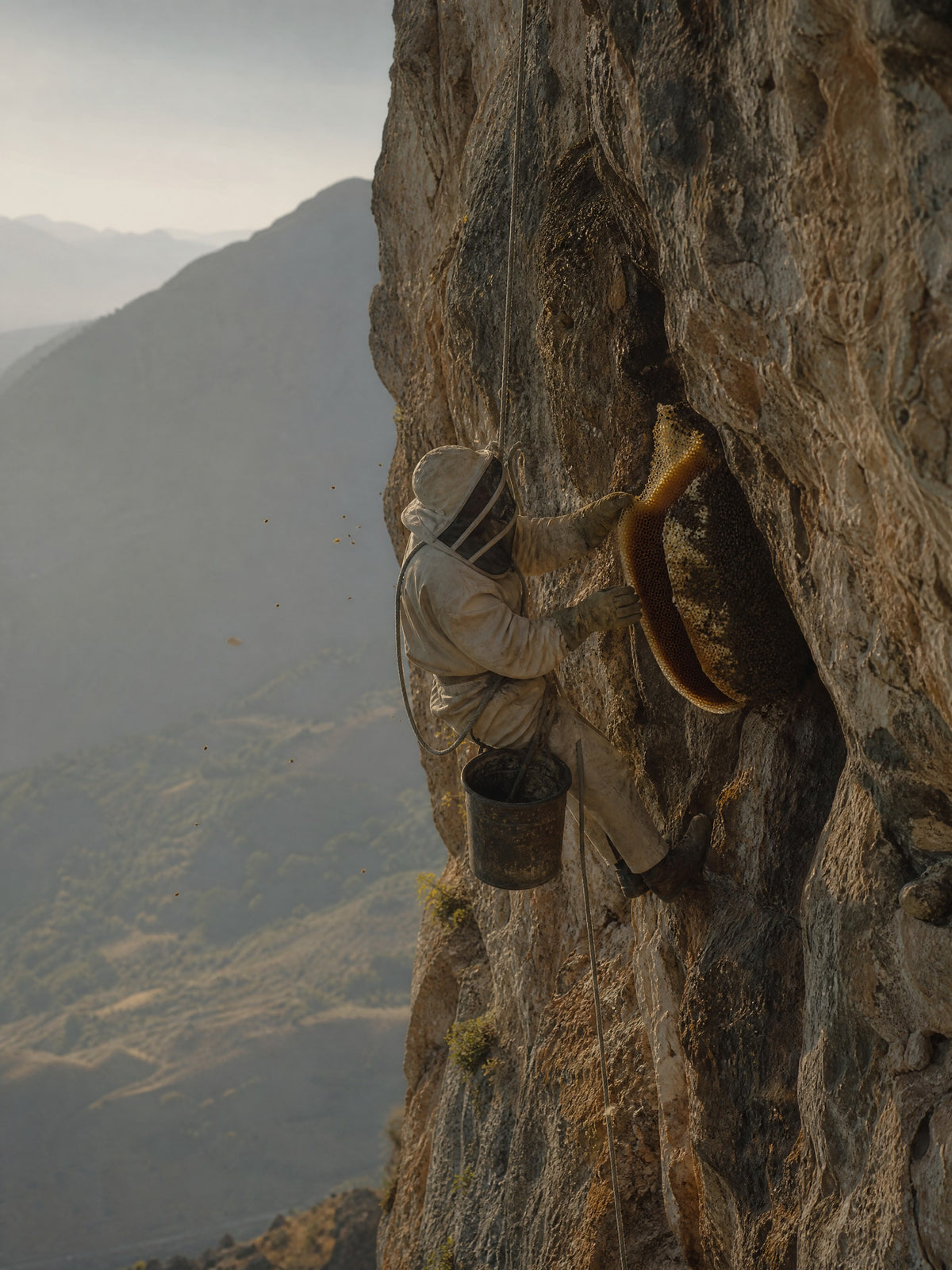
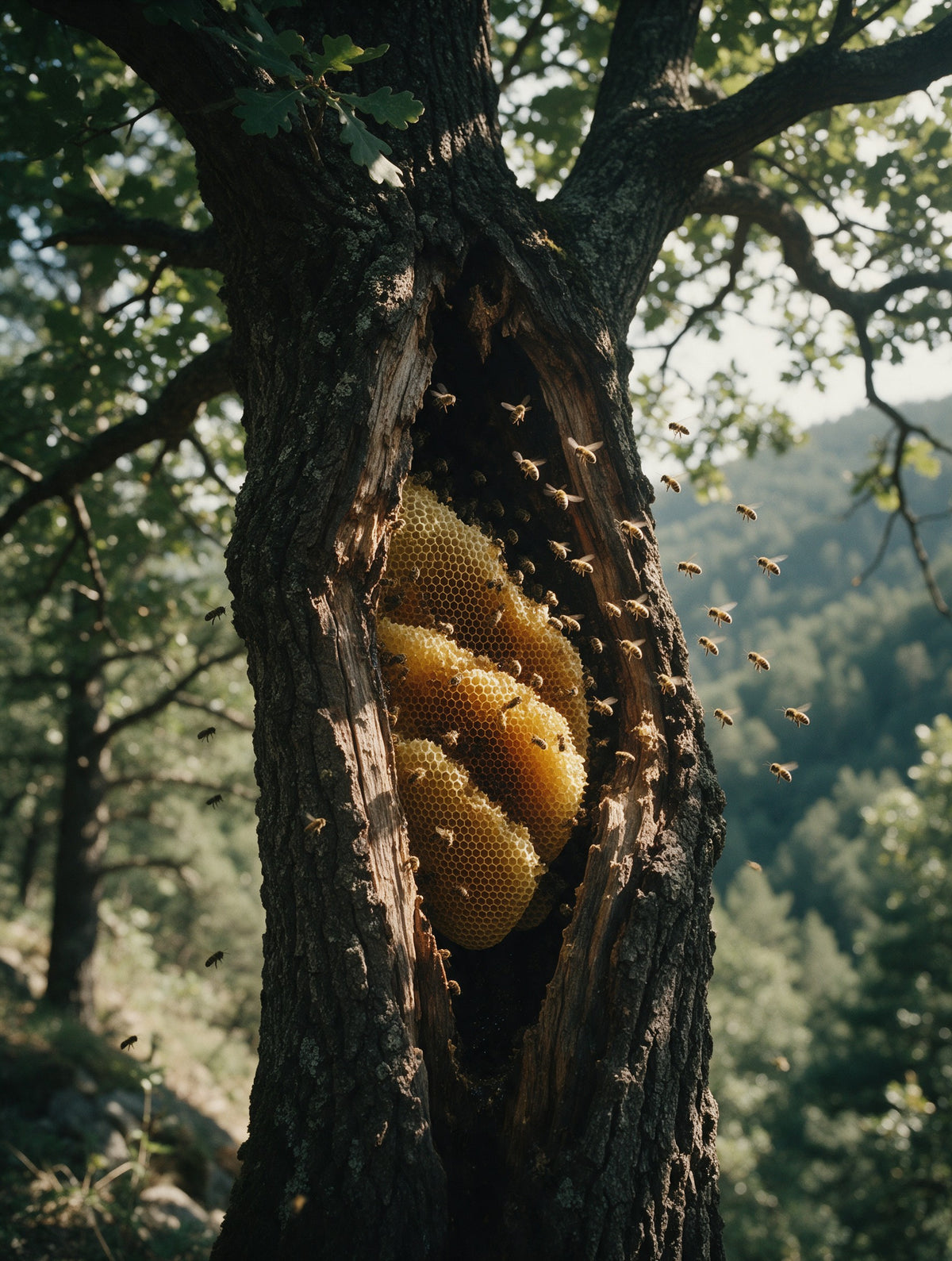
There is a kind of honey that cannot be farmed. It is made by colonies that answer to no one, in places no hive would be carried to: a crack in a limestone wall above a gorge, the rotten heart of an oak older than the village below, the roof of a cave where daylight arrives for an hour a day. The bees choose these places for their own reasons. We simply learned where to look.
Where it began, and where it led
The first comb came from Bingöl, in the far east of Türkiye, where the Euphrates begins as snowmelt. But the bees did not stop at one province, and neither did we. Today we follow wild colonies across the high country of Anatolia: the limestone ranges of the east, the oak forests of the interior, the alpine meadows that run from the Black Sea mountains to the Taurus. Summers up there are short and violent with flowers, a hundred species that bloom together for six weeks and are gone. The honey that comes from them has a density, and a bitterness at the edges, that lowland honey never carries. It tastes of altitude, and of the whole country.
We take what the colony can spare, and not one comb more.Harvest rule, unwritten
What we refuse to do
We do not keep hives. We do not feed sugar. We do not extract, pump, fine-filter or warm the honey; it leaves the comb by gravity alone and settles in stone rooms until it is ready. We do not take brood comb, and we do not return to a colony in the same season. If a colony looks thin, we photograph it, note the place, and climb down empty-handed. All of this adds up to about four kilograms of honey a year. It is not a business model; it is a limit, and we keep to it.
Why the laboratory
Wild honey is the easiest honey in the world to fake and the hardest to prove. So every batch, before it is offered, is sealed with its own number and sent to an independent, accredited laboratory for adulteration, HMF, enzyme activity, residue and pollen analysis. The report belongs to the jar. Ask for it with your batch number and we will send it.
Lal is an old word for a deep red stone, and for the moment when someone is too moved to speak. Both felt right.
Three origins
Where the comb is found decides everything.
We never blend across origins. Each jar is one place, one colony, one season.

The Cave
Limestone caves hold a cool, constant dark. Combs grown here are dense and slow; the honey is nearly black, with a mineral depth that lingers.
Cave Honey
The Hollow Oak
In ancient oaks split by time, colonies build tall vertical sheets of comb. The honey is amber and resinous, with the bitterness of bark at its edge.
Hollow Oak Honey
The High Meadow
Above the tree line the season lasts six weeks. Thyme, sainfoin and a hundred alpine flowers make a pale, bright honey that tastes of altitude.
High Meadow HoneyTake care of the bees, and the certificate takes care of itself.
Next harvest
Harvests are small and they sell out. Hear first.
One letter when a new batch comes down the mountain, with its origin, altitude and laboratory results. Nothing else.
No offers, no noise · Unsubscribe any time